Remembering your pet outdoors while the memorial stone is still being made
You don't need the finished stone to start remembering. A temporary marker, a planting, an evening walk on your pet's old route or a candle by the grave can all help in the weeks between the loss and the stone arriving. Small, repeated rituals often help more than one big gesture.
By the Pet Memorial Stones & Garden Markers editorial team · Updated September 24, 2026 · 5 min read · Sources
- Temporary markers that feel right, not makeshift
- Rituals for the first days, weeks and months
- Where to find support if it's heavier than expected

The short answer
Why do the weeks before the stone feel so hard?
The first weeks after losing a pet are often the rawest, and they're exactly when there's nothing permanent to visit yet. The grave is bare soil, or the ashes haven't come home. Meanwhile the stone might be weeks away, especially if you're taking your time over wording, which is a sensible thing to do.
What's missing in those weeks is usually routine. In the RSPCA's large survey of bereaved owners, 72.6% lost their daily routine or sense of purpose, 69.8% had trouble concentrating and 65.9% had sleep problems[1]. Outdoor rituals help partly because they give your hands and your day something to do in the place where your pet used to be.
66.9%[2]
Marking the spot
What makes a good temporary marker?
A temporary marker isn't a lesser choice. It gives the grave a visible edge, keeps the mower and other animals away, and tells everyone in the house "this is their place". Choose something easy to lift when the permanent stone arrives.
- A ring of pebbles collected from somewhere you walked together.
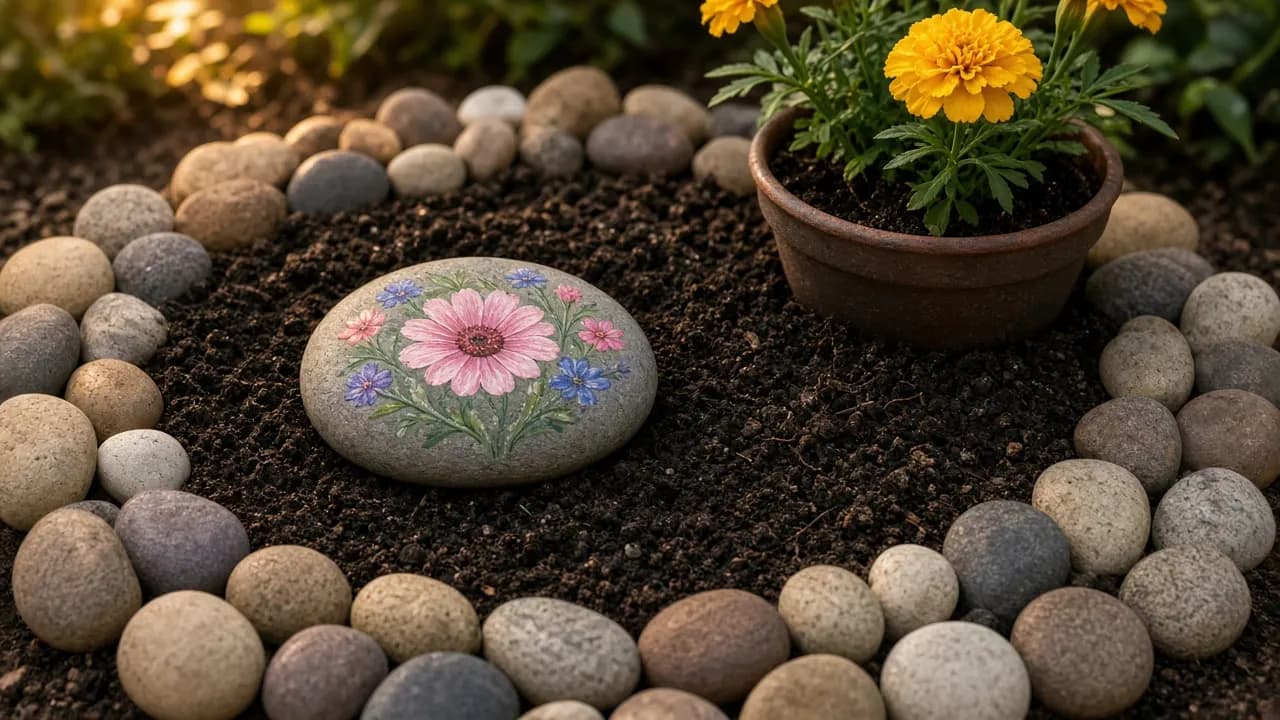
- A painted rock with their name, done by hand, even if the letters are wobbly.
- Their bowl, turned upside down and filled around with soil and a few flowers.
- A wooden stake or cross with the name written in outdoor marker pen.
- A pot of flowers set on the grave, easy to move and water.
- A garden flag or windchime nearby, so there's movement and sound.
Right now
What can you do outside in the first few days?
- Walk their route. Take the usual walk at the usual time, alone or with someone who knew them. It's hard, and it helps.
- Sit where they sat. The sunny step, the spot by the fence. Bring a cup of tea and just be there.
- Light a candle or lantern by the grave or the window as it gets dark. A solar light keeps going on its own.
- Write them a note and tuck it under the temporary marker, or read it aloud and keep it for the stone's wording later.
- Plant something small. A pot of their favorite herb or a few bulbs. It gives you a reason to come back tomorrow.
Some of these ideas feed straight into the permanent memorial. A phrase from a note often ends up on the stone, and a planting can become the heart of a small garden bed. Our post on planning a memorial garden around the marker picks up from there. You can see what other readers did in the live poll results.
What helped you most in the first weeks?
Tap an answer to vote and see how others answered. Anonymous.
The weeks ahead
Which rituals help over the following weeks and months?
Grief after a pet can take longer than people around you expect. A 2009 study found nearly 1 in 3[3] pet owners grieved for at least six months. Rituals that repeat give that longer stretch a shape. Most of that is ordinary, painful grief, but for some people it settles in and doesn't lift. Applying a UK rate of prolonged grief to US pet deaths, we estimate roughly 110,000[4] American owners a year may meet the criteria for prolonged grief disorder, so if yours feels stuck after many months, it's worth talking to someone.
- A weekly visit. Same day, same time, even for two minutes. Tidy the marker, water the plant, say hello.
- Seasonal planting. Spring bulbs in autumn, sunflowers in spring. Each season adds something.
- The monthly date. Some people mark the date each month for the first year with a walk or a candle.
- A memory jar by the back door. Write down a memory whenever one comes back and read them on the anniversary.
- Feed the birds. A feeder near the grave brings life and movement to the spot, and many people find it comforting to watch.
Looking after the spot can become a ritual in its own right. Our guide to placing and maintaining a memorial stone has gentle cleaning routines for when the permanent stone is in place.
If your pet was cremated
How can you include ashes in an outdoor ritual?
If your pet's ashes have come home, you can keep them indoors for as long as you like while you decide. There's no rush to bury or scatter. Some families scatter a little on a favorite walk and keep the rest; others bury a small amount under a new plant and keep the remainder for a stone with an ashes compartment.
If you plan to plant over ashes, mix them into plenty of soil or compost first; gardening advice is to wait 90–120 days[5] before planting into the mix. The memorial tree finder suggests a tree for your climate and yard, and the urn size calculator helps if you're choosing a stone that holds ashes.

Free tool
Memorial tree finder
Pick a tree for a planting urn that suits your climate, space and pet.
Will your pet's ashes be with the stone?
Tap an answer to vote and see how others answered. Anonymous.
If it's heavier than expected
Where can you find support beyond the garden?
Rituals help, but sometimes grief needs a person too. Many owners feel they have to hide it: 57.1%[6] of respondents in the RSPCA survey did, and 34.5%[7] were told "it's just a pet". That's not a reflection of your loss. Free pet-loss lines are there for exactly this. Harvard Health notes that losing a pet can trigger grief as intense as losing a person, so needing support is normal.
- In the US, Tufts University's Pet Loss Support Helpline is free and volunteer-staffed[8], and Cornell runs a free hotline staffed by trained veterinary students[9].
- In the UK, the Blue Cross Pet Bereavement Support Service is free and open every day of the year[10].
- If you ever feel unable to cope or unsafe, contact your doctor or a general crisis line straight away.
A painted rock on bare soil can hold as much love as polished granite. The stone will come; the remembering has already started.
When you're ready to think about the permanent stone, the memorial stone planner helps you try out wording, and you can tell us about your pet for options by email. There's no deadline. Browse the full range on our services page whenever it feels right. If you're waiting for the weather before setting a stone, our winter memorials guide and your local page explain when the ground is ready.

Reader polls
What would you choose?
Vote anonymously and see how other readers answered. The results are live counts from people who visit this site, so they show real opinions, not a scientific sample.
How often would you clean or tend your pet's stone?
Tap an answer to vote and see how others answered. Anonymous.
What helped you most in the first weeks?
Tap an answer to vote and see how others answered. Anonymous.
What was the hardest part of losing your pet?
Tap an answer to vote and see how others answered. Anonymous.

Free tools to help you plan
Memorial tree finder
Pick a tree for a planting urn that suits your climate, space and pet.
Memorial stone planner
Plan size, material and engraving length so your wording fits the stone.

Urn size calculator
Find the urn volume you need from your pet's weight, plus keepsake and sharing options.
Questions people ask
How long should I wait before ordering a pet memorial stone?
There's no rule. Many families wait a few weeks or months, which gives a grave time to settle and gives you time to find the right words. Others find ordering early helps. A temporary marker means there's no pressure either way; order when the decision feels clear rather than urgent.
What can I use as a temporary marker for my pet's grave?
Anything meaningful and easy to move: a ring of pebbles, a hand-painted rock, a wooden stake with the name, a potted plant or their upturned bowl. Avoid anything sharp or toxic if other pets or children use the garden, and choose something heavy enough that wind and animals won't shift it.
Is it normal to visit my pet's grave every day?
Yes. Many people visit daily in the first weeks, especially when the grave is in the garden and part of the old routine. Over time most find the visits change on their own, becoming weekly or tied to special dates. If daily visits comfort you, there's no reason to stop.
Can children help with outdoor memorial rituals?
Yes, and many benefit from it. Painting a rock, choosing flowers, writing a note or helping plant a bulb gives children something concrete to do with their feelings. Keep jobs simple and let them choose how involved to be. Our post on garden memorials children can visit has age-by-age ideas.
Where can I talk to someone about losing my pet?
Free pet-loss helplines exist in several countries. In the US, Tufts and Cornell veterinary schools run free support lines, and in the UK the Blue Cross runs a free bereavement service every day of the year. If grief is affecting your sleep, work or safety for a long time, your doctor can help too.


Sources and our estimates
- [1] After losing a pet, 72.6% lost their daily routine or sense of purpose, 69.8% had trouble concentrating and 65.9% had sleep problems. RSPCA — Pet Loss Survey Results, 2026.
- [2] 66.9% of respondents were surprised by how intense their grief was after losing a pet. RSPCA — Pet Loss Survey Results, 2026.
- [3] A 2009 Bulletin of the Menninger Clinic study of 106 pet owners found nearly 1 in 3 grieved for at least six months. SHRM — Grieving a Pet's Death: Should Workers Get Time Off? (2016), 2009.
- [4] Each year about 110,000 U.S. pet owners may go on to meet prolonged grief disorder criteria after a pet dies. Our estimate: 1.5M pet cremations (proxy for pet deaths with an engaged owner) x 7.5% PGD rate. How we calculate.
- [5] Gardening Know How advises letting an ash/soil-amendment mixture sit for at least 90 to 120 days before planting. Gardening Know How — Planting With Cremains: Is There a Safe Way to Bury Ashes, 2024.
- [6] 57.1% felt they had to hide their grief after a pet died, and 57.8% perceive stigma around pet loss. RSPCA — Pet Loss Survey Results, 2026.
- [7] 34.5% of bereaved pet owners were told 'it's just a pet'. RSPCA — Pet Loss Survey Results, 2026.
- [8] Tufts University's Pet Loss Support Helpline (508-839-7966) is free and volunteer-staffed, 6–9 pm ET Monday to Thursday, with 24-hour voicemail. Tufts Cummings School of Veterinary Medicine, 2026.
- [9] Cornell's free Pet Loss Support Hotline (607-218-7457) is staffed by veterinary students trained by professional grief counselors. Cornell University College of Veterinary Medicine, 2026.
- [10] Blue Cross's Pet Bereavement Support Service in the UK is a free, confidential phone and email helpline open 365 days a year. Wikipedia – Blue Cross (animal charity), 2026.
Start planning the permanent stone
Tell us what you need and where you are. We'll reply by email with clear options and prices so you can decide in your own time.