Find a tree to grow beside your pet's memorial stone
A stone marks the place; a tree makes it change with the seasons. One planting-urn maker alone offers 30+ species[1] of tree, which is why we narrowed it to a few that suit your climate and the space around the stone.
- Five ranked suggestions for your climate
- Spacing advice so the stone stays level
- Pots and patios included, not just big yards
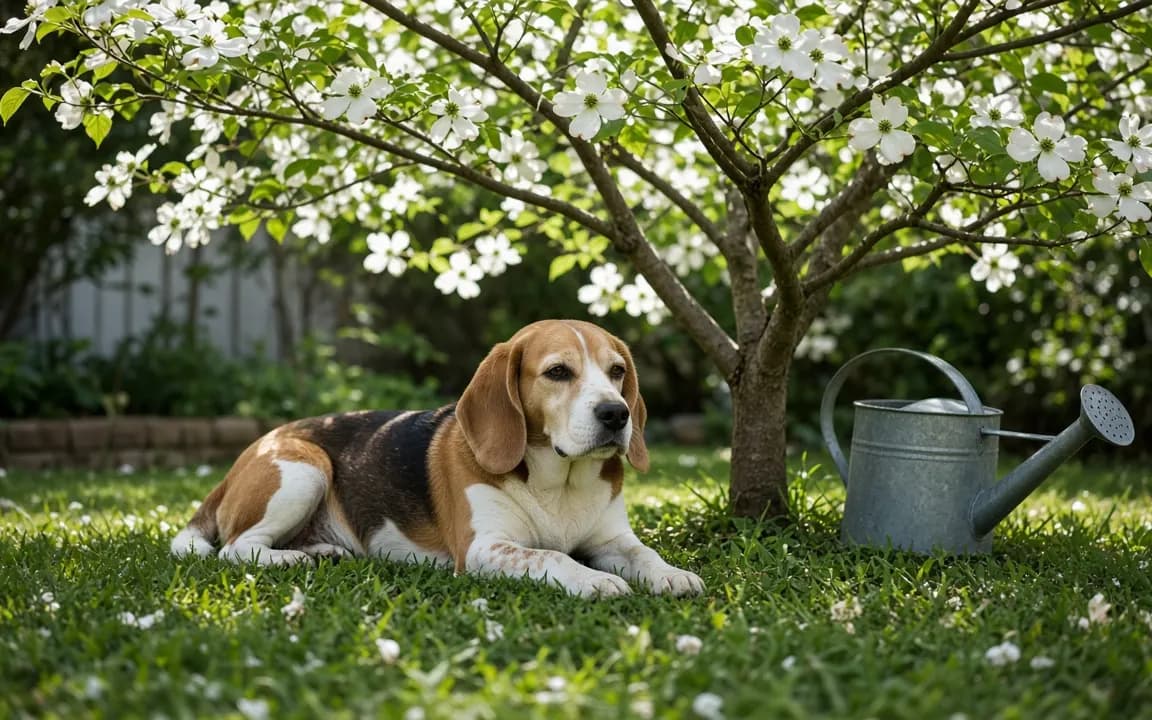
Memorial tree finder
Choose your climate, space and what you'd love the tree to do. We'll suggest a few that should thrive.
Flowering dogwood
Spring blossom and red autumn leaves; likes dappled light.
flowering, shade · strong match
Crabapple
Very hardy, with spring blossom and small fruit that birds love.
flowering, fruit · strong match
Serviceberry (Amelanchier)
White spring flowers, edible berries and fiery autumn colour. Tough and forgiving.
flowering, fruit · strong match
Eastern redbud
Pink-purple flowers on bare branches in early spring; heart-shaped leaves.
flowering · strong match
Mountain ash (rowan)
White flowers and bright red berries; traditionally a protective tree.
flowering, fruit · strong match
Planting with ashes? Cremated remains are very alkaline, so most bio urns mix them with a soil blend to protect young roots. If other pets use the garden, check that the tree's leaves and fruit are safe for them. A local nursery can confirm what grows best where you live.
Suggestions are a general guide, not a local planting plan.
Using the finder
How to use the tree finder
- Pick your climate: cold, temperate, warm or hot and dry. If you know your USDA hardiness zone, cold is roughly zones 3 to 5, temperate 6 to 7, warm 8 to 9 and hot-dry the desert Southwest and similar.
- Pick your space: a pot on a patio, a small yard or a large yard.
- Pick what you'd like: flowering, evergreen, fruit or shade.
You'll get five trees, top match first, each with a one-line note, tags for what it offers (flowering, evergreen, fruit or shade) and a flag if it would do better in a different space. The list is fixed and doesn't depend on any live data, so it's the same every time you run it with the same answers.
Free tool
Memorial tree finder
Pick a tree for a planting urn that suits your climate, space and pet.
Behind the suggestions
How the finder picks trees that work next to a stone
The finder works from a hand-picked list of 22 trees. A tree only appears if it suits the climate you pick; after that, it scores higher for fitting your space and higher again for offering what you asked for, especially when that's its main feature. Space matters for a memorial because a tree that outgrows a small yard ends up being cut down. What the finder doesn't rate is roots, so that part is up to you: shallow-rooted, aggressive trees like silver maples and willows can lift a marker within a few years.
That's why spacing is worth planning before you dig. For small trees, set the stone at least 3 to 4 feet from the trunk; for large shade trees, near the edge of the future canopy. Our post on designing a pet memorial corner shows how to leave room for both to grow.
| Climate | Small yard or pot | Large yard |
|---|---|---|
| Cold | Serviceberry, crabapple, dwarf Alberta spruce | Sugar maple, Colorado blue spruce |
| Temperate | Japanese maple, flowering dogwood, redbud | Oak, sugar maple, river birch |
| Warm | Crape myrtle, redbud, Meyer lemon | Southern magnolia, oak |
| Hot and dry | Desert willow, pomegranate, fig | Palo verde, olive |
An example
Worked example: a flowering tree for Pip in a small Ohio yard
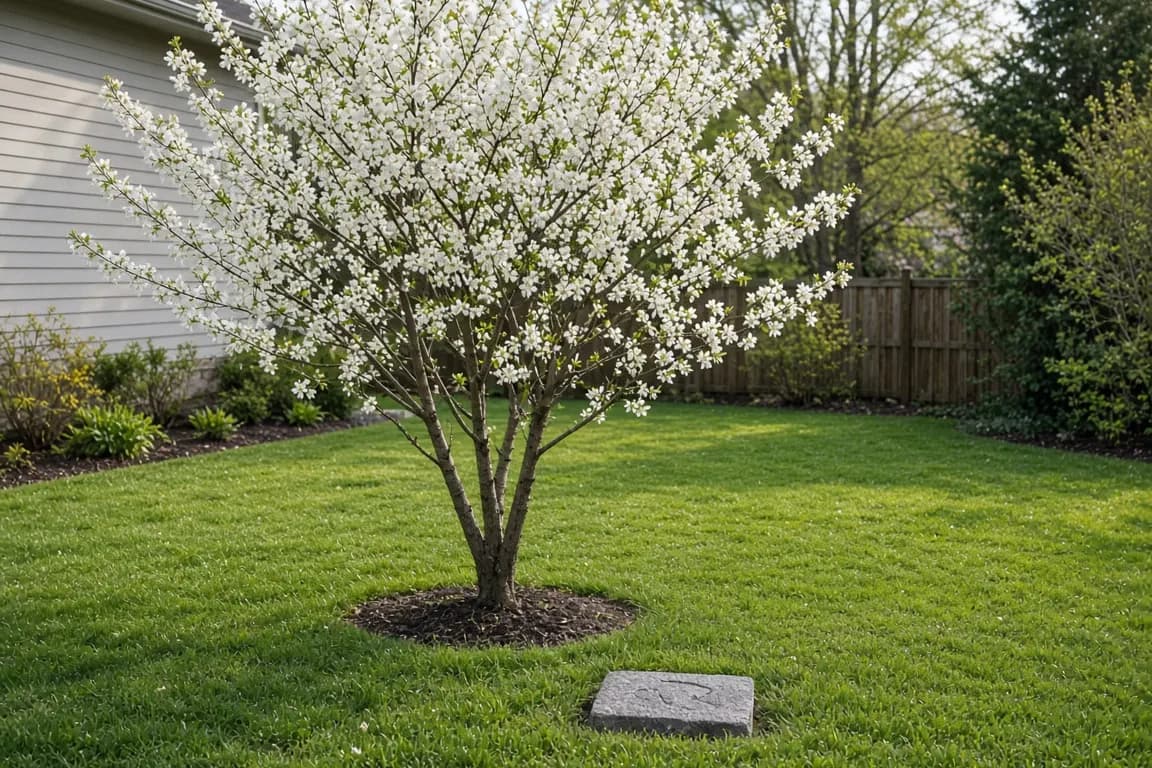
Pip, a beagle, is buried in a small back yard in Ohio, and his family has ordered a flat granite marker. They choose temperate, small yard and flowering. The finder puts a flowering dogwood first, followed by crabapple, serviceberry, eastern redbud and mountain ash, all trees for a small yard of up to about 20 feet.
They pick the serviceberry: white spring flowers, berries the birds love and autumn colour around Pip's birthday in October. They plant it about 4 feet from the grave so the roots won't nudge the marker, and set the stone on a gravel bed at the same time. The memorial stone planner helped them fit "PIP, nose to the ground" on the marker.
Two things to know
Planting with ashes, and keeping other pets safe
Cremated remains are strongly alkaline and high in salt, which can burn young roots. If you'd like ashes in the planting hole, gardening advice is to mix them with plenty of compost and let the mix sit 90–120 days[2] before planting, or to scatter them in a ring well away from the root ball. A pet's ashes are also more than most people expect, around 3-5% of body weight[3], so a large dog's may be better split between the tree and an urn.
If you have other animals, avoid trees that are toxic to them. Yew is highly poisonous to dogs, cats and horses; the leaves and pits of cherries and peaches can be harmful; and black walnut hulls can make dogs ill. The finder doesn't flag toxic trees one by one; it only reminds you to check that leaves and fruit are safe for other pets, and its list includes fig and citrus, both worth asking about. Check with your vet if a curious dog or grazing horse will share the garden. The ASPCA's list of toxic and non-toxic plants lets you check any tree by name.
What it can't tell you
Where the finder's suggestions need local checking
Climate bands are broad. A sheltered city garden can be a zone warmer than the suburbs, and a frost pocket at the bottom of a slope can be colder. Soil matters too: clay, sand and chalk each favour different trees. The finder can't see your yard, so use its list as a shortlist to take to a local nursery. To confirm your zone, enter your ZIP code on the USDA plant hardiness zone map, and the Arbor Day Foundation's planting guide covers where and how to plant.
Cold climates bring one more consideration for the stone itself. A tree's shade keeps snow and moisture on a marker longer, which matters for porous stone. Our cold-weather memorial notes explain what to pair with a shady spot. If you're not sure which region your town falls in, local pages on our locations directory include climate notes.
Next steps
Bringing the tree and stone together
Natural memorials are widely appealing: 68%[4] of US consumers in a National Funeral Directors Association survey were interested in green or natural burial options, and a tree beside a local stone is a small version of that idea. Many families also see the planting as a job for everyone; our post on garden memorials children can visit has ways to involve them. Applied to the 86.9 million US pet-owning households, that suggests about 59 million[5] could be open to eco-friendly aftercare, by our estimate, though being interested is a long way from choosing it.
When you've chosen the tree, tell us about the spot and we'll suggest stones that suit the setting, from a mossy river rock under a maple to a flush granite marker by a flowering dogwood. Our services overview shows the stone types that suit a planted bed, and the live poll results show how other readers mark the spot.
Where would your pet's stone go?
Tap an answer to vote and see how others answered. Anonymous.

Reader polls
What would you choose?
Vote anonymously and see how other readers answered. The results are live counts from people who visit this site, so they show real opinions, not a scientific sample.
Where would your pet's stone go?
Tap an answer to vote and see how others answered. Anonymous.
If you moved house, what would happen to the memorial?
Tap an answer to vote and see how others answered. Anonymous.
Which memorial feels most like your pet?
Tap an answer to vote and see how others answered. Anonymous.

Free tools to help you plan
Memorial tree finder
Pick a tree for a planting urn that suits your climate, space and pet.
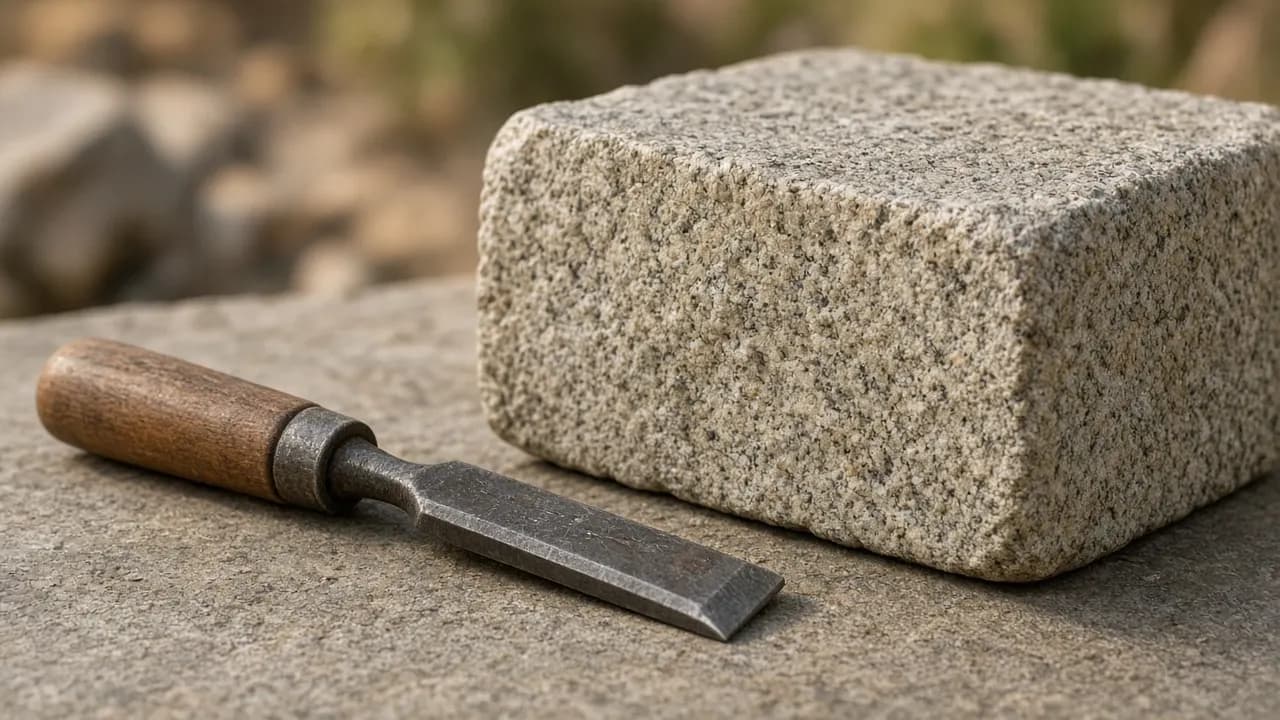
Memorial stone planner
Plan size, material and engraving length so your wording fits the stone.
Urn size calculator
Find the urn volume you need from your pet's weight, plus keepsake and sharing options.
Questions people ask
What is a good small tree to plant for a pet memorial?
For small yards and temperate climates, Japanese maple, dogwood, redbud and serviceberry are popular because they stay under about 25 feet and have gentle roots. In pots, dwarf Japanese maples and dwarf fruit trees work well. The finder narrows the list for your climate.
Can I plant a tree directly on my pet's ashes?
Not directly on fresh ashes, which are alkaline and salty enough to harm roots. Mix them with compost and let the mix rest for a few months, or place the ashes in a ring away from the root ball. Bio-urns designed for planting handle this with a soil buffer.
How far should a memorial stone be from a tree?
For small ornamental trees, at least 3 to 4 feet from the trunk. For large shade trees, closer to the edge of the mature canopy. Roots thicken over time and can tilt or crack a stone, especially a thin slate plaque or a flush marker without a gravel base.
Which trees should I avoid if I have other pets?
Avoid yew entirely, as it's highly toxic to dogs, cats and horses. Be cautious with cherry, peach and plum, whose leaves and pits can be harmful, and with black walnut. Check with your vet about any tree before planting it where animals roam or graze.
What if I rent or might move soon?
Choose a tree in a large pot, like a dwarf maple or dwarf fruit tree, and a portable stone set on gravel rather than concrete. Both can move with you. Leaving a memorial behind is a common worry, and planning for portability now saves a hard choice later.


Sources and our estimates
- [1] The Living Urn offers more than 30 tree species for its bio-urn planting system. The Living Urn — FAQ, 2026.
- [2] Gardening Know How advises letting an ash/soil-amendment mixture sit for at least 90 to 120 days before planting. Gardening Know How — Planting With Cremains: Is There a Safe Way to Bury Ashes, 2024.
- [3] Embrace notes cremated remains typically weigh about 3-5% of the pet's original body weight. Embrace Pet Insurance - Bury or Cremate Your Dog? Costs, Pros & Cons, 2025.
- [4] 68% of respondents to NFDA's 2024 Consumer Awareness and Preferences Survey expressed interest in green funeral or natural burial options. NFDA — Green Burial Resources for Funeral Professionals, 2024.
- [5] About 59 million U.S. pet-owning households may be open to eco-friendly aftercare options. Our estimate: 86.9M pet households x 68% interested in green funeral options. How we calculate.
Plan the stone to go with your tree
Tell us what you need and where you are. We'll reply by email with clear options and prices so you can decide in your own time.