Planning a pet memorial garden around its marker, before you order
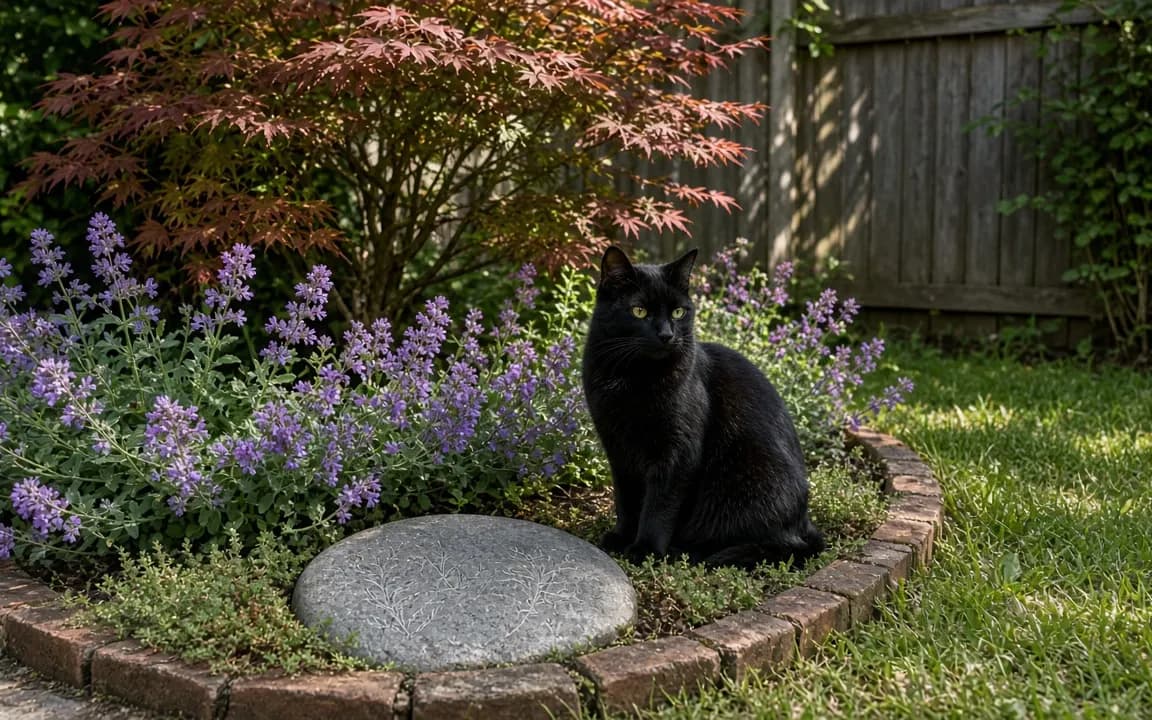
Decide the spot and the planting first, then choose a stone that suits them. A memorial garden can be as small as a 3-foot bed: one marker, two or three pet-safe plants, and something that changes with the seasons so there's always a reason to visit.
By the Pet Memorial Stones & Garden Markers editorial team · Updated September 24, 2026 · 5 min read · Sources
- Layouts that work in a corner, a bed or a pot
- Pet-safe plants, and what not to plant over a grave
- Sizing the stone so it doesn't get lost or overwhelm
The short answer
Why plan the garden before you choose the stone?
A stone chosen on its own often ends up the wrong size for its spot: a tiny rock swallowed by hostas, or a big granite slab that dominates a small bed. Sketching the space first tells you how big the marker should be, which way it should face and whether it should sit flush, tilted or upright.
It also gives you something to do in the weeks when ordering a permanent stone feels too soon. Many people find that clearing a patch of ground, choosing plants and watching them establish is a gentler first step than picking out lettering. Our outdoor rituals post has ideas for that in-between time.
Home gardens are where many pets end up. In a US survey of dog and cat owners, 34.9%[1] said home burial was their preferred aftercare for a future pet, close behind cremation. In the UK, 27%[2] of owners in a regulator's survey had buried a pet at home. You can see where other readers are placing their stones in the live poll results.
Location
Where in the garden should a memorial bed go?
- Somewhere you'll see every day. A spot visible from the kitchen window or back door gets visited far more than one hidden behind the shed.
- Somewhere they loved. The sunny patch by the fence, the bit of lawn they rolled on, the corner they guarded.
- Away from pipes, cables and septic lines. Call your utility locator before digging deeper than a spade's depth.
- Not in a hollow that floods. Standing water is hard on stones and plants, and on a grave.
- Where you can reach it easily. A path or stepping stones mean you'll still visit in wet weather.
Where would your pet's stone go?
Tap an answer to vote and see how others answered. Anonymous.
Design
What does a simple pet memorial garden layout look like?
Three layouts cover most gardens. Pick one, mark it out with string or a hose, and live with it for a few days before you dig.
| Layout | Space needed | How it's arranged | Marker that suits it |
|---|---|---|---|
| Corner bed | About 3 by 3 ft | Stone at the front, one shrub or small tree behind, low plants at the sides | Flush or slightly tilted granite, 10 to 12 in wide |
| Island in the lawn | A circle 4 to 6 ft across | Stone in the center or offset, ring of groundcover, edging to keep grass out | Rock or upright stone that reads from all sides |
| Container memorial | One large pot or trough | Small shrub or perennials with a stone plaque leaning on the rim or set in gravel | Small slate or river rock, under 8 in |
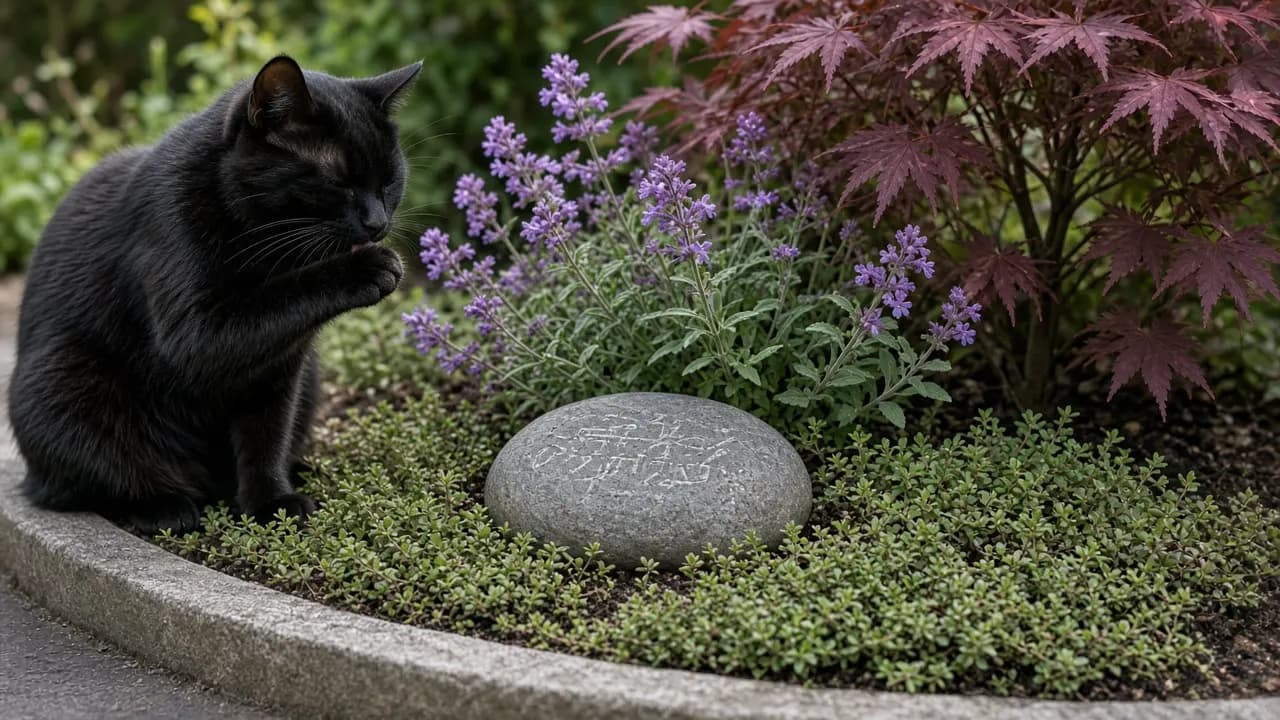
Scale the stone to the bed. As a rough guide, a marker around a quarter to a third of the bed's width looks balanced. The memorial stone planner helps you check that the wording will be readable at the size you pick.
Planting
Which plants are safe near a pet memorial?
If other pets share the garden, choose plants that won't harm them. Some classic memorial plants are dangerous: lilies are highly toxic to cats, even the pollen, and foxglove, oleander, yew, azalea and lily of the valley are toxic to dogs and cats. The ASPCA's searchable list of toxic and non-toxic plants is worth a look before you shop.
- Low and soft around the stone: creeping thyme, ajuga or sweet alyssum.
- For color: snapdragons, zinnias, sunflowers, calendula (pot marigold) and asters.
- For scent: rosemary, basil and catmint, which many cats adore.
- For structure: a small shrub or tree behind the stone, such as a serviceberry, Japanese maple or camellia.
Keep deep-rooted trees a little away from the grave itself, so roots don't disturb it or lift the stone. The memorial tree finder suggests trees by climate and yard size, with notes on how far to plant them from a marker. To check what will survive your winters, look up your zone on the USDA plant hardiness zone map.
Free tool
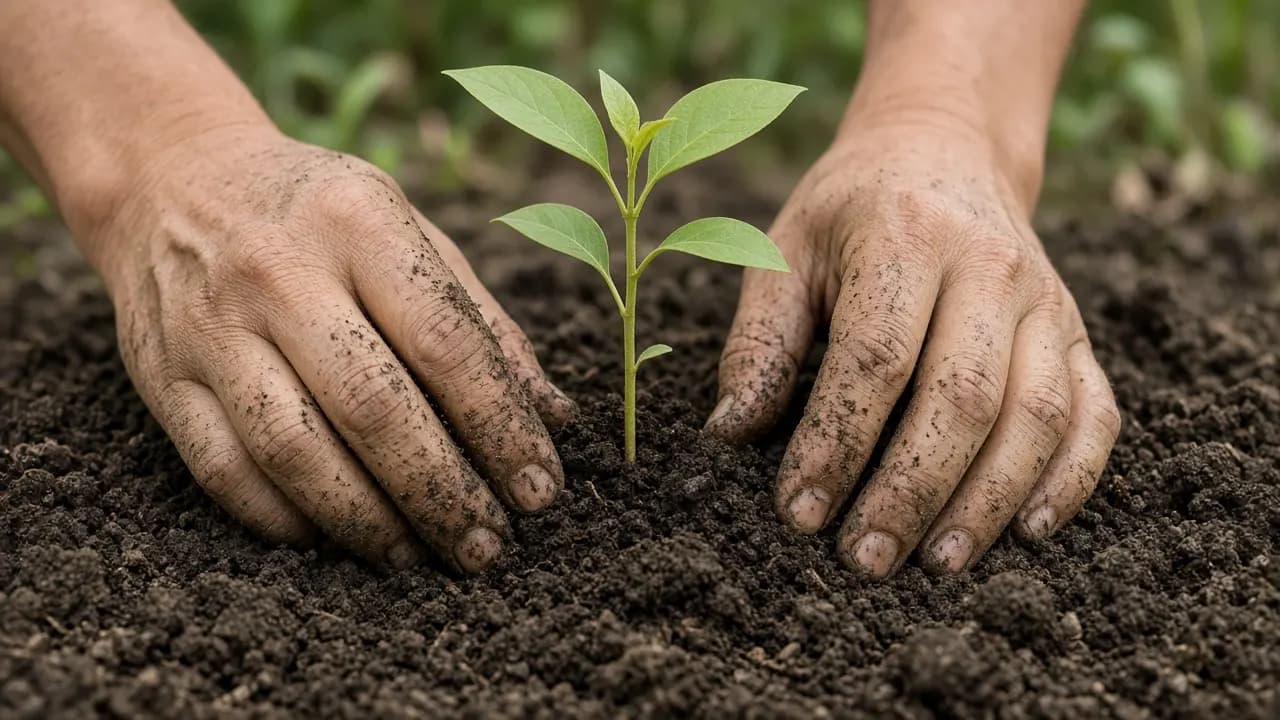
Memorial tree finder
Pick a tree for a planting urn that suits your climate, space and pet.
If your pet was cremated
Can you plant over your pet's ashes?
Yes, with some care. Cremated remains are very alkaline and salty, which can harm roots in direct contact. Gardening advice is to mix ashes well into plenty of soil or compost and let the mix rest for 90–120 days[3] before planting into it. Scattering a thin layer and raking it in is gentler than burying a solid pile under a new plant.
Biodegradable urns designed for planting are another route. The Bios Urn for pets costs $99[4], and The Living Urn's pet planting system (tree not included) costs $119[5]. Both are designed to buffer the ashes for young roots. Interest in greener choices is strong: 68%[6] of people in a National Funeral Directors Association survey said they were interested in green or natural options. Applied to the 86.9 million US pet-owning households, we estimate about 59 million[7] may be open to eco-friendly aftercare, though interest is a long way from choosing it.
Will your pet's ashes be with the stone?
Tap an answer to vote and see how others answered. Anonymous.
Details
What finishing touches make a memorial garden feel complete?
- Edging. A ring of brick, steel or stone keeps grass from creeping over the marker and makes mowing easy.
- Gravel or mulch. A fine gravel apron around the stone stops soil splashing onto the letters when it rains.
- Light. A single solar light lets you see the spot from the house on dark evenings.
- Somewhere to pause. A flat stone to kneel on, or a small seat nearby. Our memorial bench guide covers larger seating.
- Wildlife. A shallow water dish or a feeder brings birds, so the corner never feels still.
Keep it simple enough to maintain. A memorial bed that needs weekly weeding can start to feel like a chore. Evergreen groundcover and one or two reliable perennials will look after themselves, and our guide to placing and maintaining a memorial stone covers keeping the marker itself clean. Your local page has climate notes that help with plant choice.
The garden will change every season. The stone is the part that stays the same, so give it a spot where you'll always find it.
When your plan is ready, tell us the space and style and we'll reply by email with marker options and prices that suit it. Browse all marker types first if you'd like.

Reader polls
What would you choose?
Vote anonymously and see how other readers answered. The results are live counts from people who visit this site, so they show real opinions, not a scientific sample.
Where would your pet's stone go?
Tap an answer to vote and see how others answered. Anonymous.
Will your pet's ashes be with the stone?
Tap an answer to vote and see how others answered. Anonymous.
Where are (or will be) your pet's ashes?
Tap an answer to vote and see how others answered. Anonymous.

Questions people ask
How big should a pet memorial garden be?
It can be as small as you like. A 3 by 3 foot corner with one stone and a few plants is enough to feel like a special place, and a single large pot works on a patio or balcony. Bigger isn't better if it becomes hard to keep tidy; choose a size you'll enjoy tending.
What flowers are safe to plant on a pet's grave?
If other pets use the garden, choose non-toxic plants such as creeping thyme, snapdragons, zinnias, sunflowers, calendula, asters or catmint. Avoid lilies, which are very dangerous to cats, and foxglove, oleander, yew, azalea and lily of the valley. Check the ASPCA's plant list if you're unsure about a particular plant.
Can I plant a tree directly on my pet's grave?
You can, but it's usually kinder to plant a little to one side. Digging a tree hole can disturb the grave, and roots will eventually spread through it and may lift a stone set nearby. Planting a few feet away, with the marker between the tree and the path, gives you the tree and keeps the grave undisturbed.
Is it safe to mix pet ashes into garden soil?
Yes, in moderation. Ashes are alkaline and high in salts, so a concentrated pile can harm roots. Mix them thoroughly into a large amount of soil or compost, water well, and give it a few months before planting into it. Scattering thinly and raking in is gentler than burying a single heap.
Should the memorial stone go on the grave or beside it?
Either works. A flush stone directly on the grave marks the exact spot and is easy to mow around. A stone at the front of a planted bed, with the grave under the plants, looks softer and keeps you from standing on the grave. If your pet was recently buried, wait for the soil to settle before setting anything heavy.


Sources and our estimates
- [1] Asked their preferred future after-death care, 40.4% of US owners chose traditional flame cremation and 34.9% home burial; 10.7% chose cemetery burial and 1.9% alkaline hydrolysis (aquamation). Cooney, Kogan, Brooks, Ellis - Pet Owners' Expectations for Pet End-of-Life Support and After-Death Body Care, Topics in Companion Animal Medicine (2020), 2020.
- [2] In the same CMA survey, 27% of UK owners buried their pet at home and 2% used a pet burial company elsewhere. UK Competition and Markets Authority - Veterinary services for household pets, Provisional decision report Part A (Oct 2025), 2025.
- [3] Gardening Know How advises letting an ash/soil-amendment mixture sit for at least 90 to 120 days before planting. Gardening Know How — Planting With Cremains: Is There a Safe Way to Bury Ashes, 2024.
- [4] The Bios Urn for pets, a biodegradable urn with a seed capsule, costs $99. Bios Urn – Pets, 2026.
- [5] The Living Urn's pet bio-urn planting system (without a tree) costs $119. The Living Urn – Pet tree urn, 2026.
- [6] 68% of respondents to NFDA's 2024 Consumer Awareness and Preferences Survey expressed interest in green funeral or natural burial options. NFDA — Green Burial Resources for Funeral Professionals, 2024.
- [7] About 59 million U.S. pet-owning households may be open to eco-friendly aftercare options. Our estimate: 86.9M pet households x 68% interested in green funeral options. How we calculate.
Find a marker that fits your garden plan
Tell us what you need and where you are. We'll reply by email with clear options and prices so you can decide in your own time.