Moving house when your pet is buried in the garden: what you can do
Most families leave the grave, take the memorial stone and plant something in its place, which is simple and gentle. If you can't bear to leave your pet, you can exhume and rebury or cremate them, or move a buried urn of ashes, which is far easier. Any choice made with care is the right one for you.
By the Pet Memorial Stones & Garden Markers editorial team · Updated September 24, 2026 · 6 min read · Sources
- Four realistic options, from simplest to hardest
- What exhuming involves, honestly explained
- How to say goodbye to the old garden
The short answer
Is it wrong to leave your pet's grave behind when you move?
No. Leaving the grave is what most families do, and it isn't abandoning your pet. Their body has become part of a garden they loved, and what you carry with you, the stone, the memories, perhaps a cutting from a plant that grew over them, is what keeps them close. Many people feel guilty about this, and it helps to know how common the situation is.
Home burial is widespread. In a US survey of dog and cat owners, 34.9%[1] said home burial was their preferred aftercare for a future pet, and in the UK, 27%[2] of owners in a regulator's survey had buried a pet at home. With people moving several times in a lifetime, a great many families face this exact decision.
If you moved house, what would happen to the memorial?
Tap an answer to vote and see how others answered. Anonymous.
Your choices
What are the options when you move?
| Option | What it involves | Effort | Good for |
|---|---|---|---|
| Leave the grave, take the stone | Lift the marker, plant something in its place | Low | Most families; older graves |
| Leave everything | Stone stays; tell the new owners | None | Stones set in concrete; a garden you're glad to hand on |
| Move buried ashes | Dig up the urn or container and rebury or keep indoors | Low to moderate | Pets who were cremated |
| Exhume and rebury or cremate | Dig up the body, then rebury at the new home, a pet cemetery or cremate | High, and emotionally hard | Recent graves, or when leaving feels impossible |
There's no need to decide in a hurry. If a sale is in progress, most options can wait until the last few weeks, and some families decide only once they've found the right spot at the new home. If you plan to dig at either house, contact 811 first in the US; it's free and marks buried lines. Other readers' plans for their stones are in the live poll results.
Option one
How do you take the stone and leave the grave?
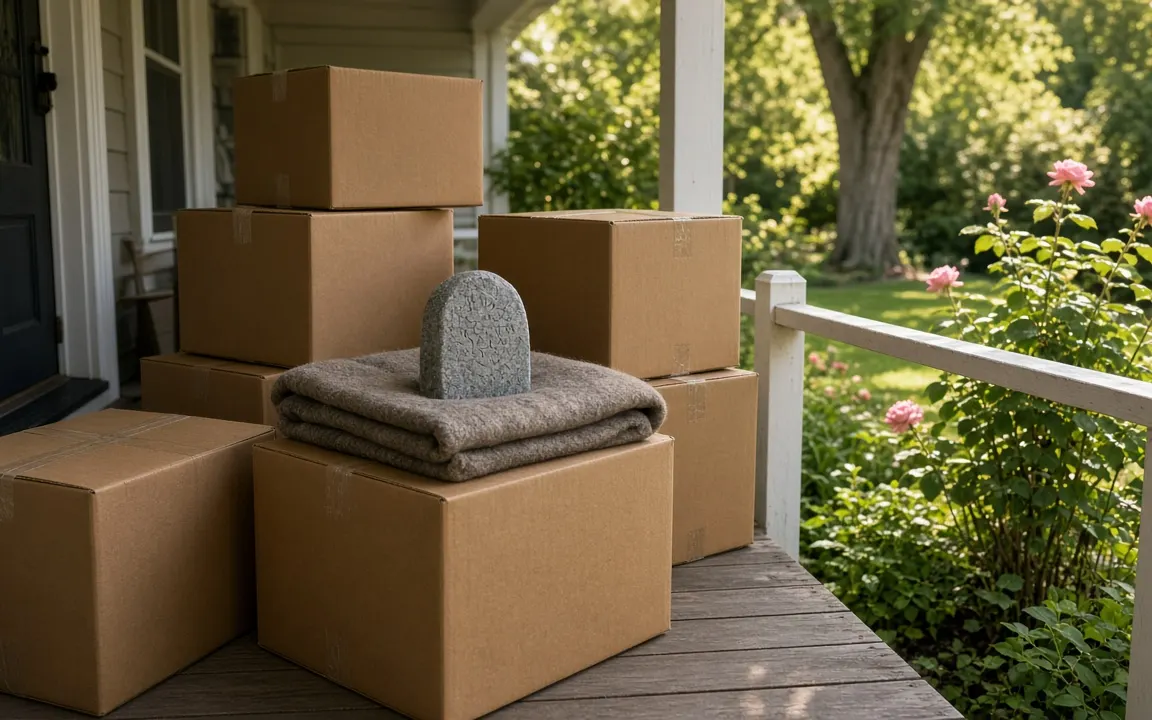
If the stone sits on gravel or sand, it lifts out easily. Slide a spade under one edge, lever it gently, and lift with two people if it's heavy. Wrap it in a blanket for the move, face inward, and keep it flat so edges don't chip.
- Plant something in its place. A shrub, a rose or a patch of bulbs marks the grave for you without telling the next owners anything they'd rather not know.
- Take a cutting or division of a plant that grew over your pet, and plant it at the new home beside the stone.
- Collect a little soil or a pebble from the grave to place under the stone in its new spot.
- Photograph the grave with the house behind it, so you always know where it was.
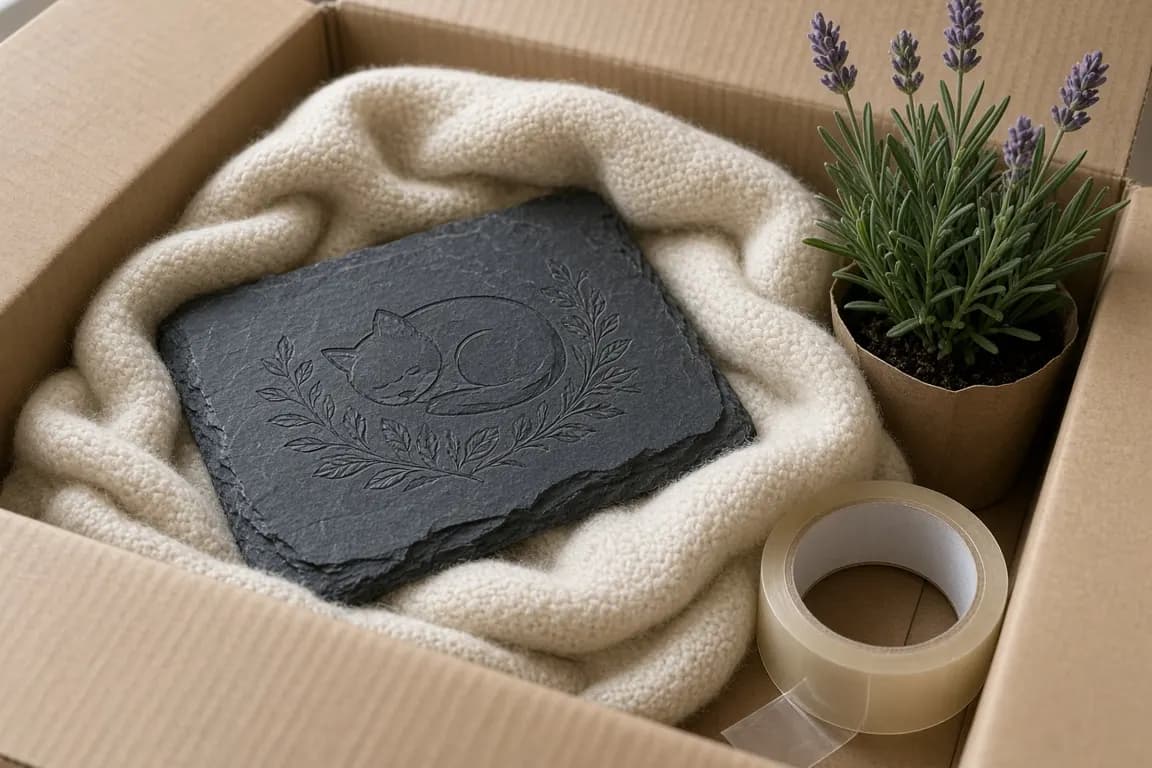
At the new home, set the stone somewhere meaningful, even if nothing lies beneath it. It becomes a memorial for a place, not a grave, and that's allowed. Our step-by-step on how to set a memorial stone in the garden covers the base.
Option two
What if your pet's ashes are buried, not their body?
This is much simpler. Ashes don't decompose, so a buried urn or sealed container can be dug up years later and moved. Biodegradable urns may have broken down, in which case the ashes will be mixed into soil; you can gently lift the soil around where they were and take that instead.
At the new home you can rebury them, keep them indoors, or place them in a memorial stone with a sealed compartment; the urn size calculator estimates how much space they need. Some families choose a pet cemetery instead, so the ashes have a permanent home however many times they move. One Colorado and Wyoming cemetery charges $400[3] for a cremains plot, and a Sussex cemetery charges £60 to bury ashes unattended or £145 attended[4]. At that UK cemetery, burying ashes unattended costs about one-eleventh as much as a whole-body green burial[5], by our estimate.

Free tool
Urn size calculator
Find the urn volume you need from your pet's weight, plus keepsake and sharing options.
Option three
Can you dig up a buried pet to move them?
In most places you can exhume a pet from your own land, but it's a hard thing to do, physically and emotionally, and it's worth being prepared. What you find depends on how long ago the burial was, the soil and what your pet was wrapped in. After a few years there may be only bones; in the first months, there will not be. If you're in England, the government's guidance on animal burials confirms that small pets such as dogs and cats can be buried on your own land without permission, which covers reburial at a new home too.
- Check local rules first. Some councils and states have rules about disturbing burials or transporting animal remains. A quick call to your local environmental health office or vet can confirm.
- Think about asking for help. Some pet cemeteries and aftercare providers will carry out exhumation, or accept exhumed remains for cremation. Ask your vet who they'd recommend.
- If you do it yourself, wear gloves and a mask, dig gently with a hand trowel once you're near, and have a sturdy lined box ready.
- Decide the destination first: reburial at the new home, a pet cemetery or cremation.
Cremating exhumed remains means you'll never face this decision again, which is why many families choose it. Burial in a pet cemetery is the other permanent answer: across five posted US price lists, a small pet's whole-body burial including plot and opening had a median of about $350[6], our own estimate. The memorial budget planner helps you compare options.
The sale
Do you need to tell the buyers a pet is buried in the garden?
In most places there's no specific legal requirement to disclose a pet's grave, but it's kind, and it can avoid a distressing surprise if they dig a pond or extension. A short note left with the house papers is enough: roughly where, and that it's a family pet. If you're leaving the stone, ask whether they're happy to keep it; many buyers are touched to be asked.
Your estate agent or lawyer can advise on anything specific to your area. If you're renting, speak to your landlord before you leave, and think about taking the stone regardless. Local rules on burial vary by state and country; our local pages note what we know for your area.
Saying goodbye to a place
How can you say goodbye to the old garden?
Leaving a home where a pet is buried can reopen grief, even years later. A small ritual can help: a last visit to the grave with everyone who loved them, a few words, a flower left behind. Some families write a letter to the pet and bury it at the spot, or read it aloud and take it with them. Our post on outdoor rituals after pet loss has more ideas.
Then give the stone a new home soon after you arrive. Our guide to designing a pet memorial corner is a good place to start planning a spot that's set up for the long run, and the memorial tree finder suggests something to plant beside it in your new climate.
You're not leaving them behind. You're taking the part of them that was always going to come with you.
If you'd like a new stone for the new garden, tell us where you're moving and we'll reply by email with options from makers who deliver there. Browse all stone types too.

Reader polls
What would you choose?
Vote anonymously and see how other readers answered. The results are live counts from people who visit this site, so they show real opinions, not a scientific sample.
If you moved house, what would happen to the memorial?
Tap an answer to vote and see how others answered. Anonymous.
Will your pet's ashes be with the stone?
Tap an answer to vote and see how others answered. Anonymous.
Where are (or will be) your pet's ashes?
Tap an answer to vote and see how others answered. Anonymous.

Free tools to help you plan
Urn size calculator
Find the urn volume you need from your pet's weight, plus keepsake and sharing options.
Memorial budget planner
Add up cremation, urn, keepsakes and a farewell so the total holds no surprises.

Memorial tree finder
Pick a tree for a planting urn that suits your climate, space and pet.
Questions people ask
Can I take my pet's memorial stone when I sell my house?
Usually, yes. A garden memorial stone is normally treated as your personal property, especially if it sits on gravel rather than being set in concrete. To avoid any confusion, mention it to your agent or list it as excluded from the sale. If it's set in concrete, you can still remove it, but plan time and help for the job.
Is it legal to dig up my pet's body and move it?
In most places you can exhume a pet from land you own, but rules on disturbing burials and transporting animal remains vary. Check with your local council, environmental health office or vet before you start. Some pet cemeteries and aftercare providers can handle exhumation and cremation for you.
How long does a buried pet take to decompose?
It varies widely with soil, depth, climate, the pet's size and what they were wrapped in. Small pets in warm, well-drained soil may be reduced to bones within a year or so, while larger pets in cold, wet or clay soil can take several years. If you plan to exhume, be prepared for any stage.
Can buried ashes be moved to a new home?
Yes. Cremated remains don't decompose, so an urn or sealed container can be dug up and moved at any time. If a biodegradable urn has broken down, gently lift the soil where the ashes were and take that. You can then rebury them, keep them indoors or place them in a memorial stone with a compartment.
Should I tell the new owners my pet is buried in the garden?
It's not usually a legal requirement, but it's a kind thing to do. A short note with the house papers saying roughly where the grave is prevents a distressing discovery if they dig there. If you're leaving the stone, ask whether they'd like to keep it; many buyers are glad to.


Sources and our estimates
- [1] Asked their preferred future after-death care, 40.4% of US owners chose traditional flame cremation and 34.9% home burial; 10.7% chose cemetery burial and 1.9% alkaline hydrolysis (aquamation). Cooney, Kogan, Brooks, Ellis - Pet Owners' Expectations for Pet End-of-Life Support and After-Death Body Care, Topics in Companion Animal Medicine (2020), 2020.
- [2] In the same CMA survey, 27% of UK owners buried their pet at home and 2% used a pet burial company elsewhere. UK Competition and Markets Authority - Veterinary services for household pets, Provisional decision report Part A (Oct 2025), 2025.
- [3] A cremains burial plot costs $400 at Precious Memories Pet Cemetery, and reopening an existing grave for cremains $50. Precious Memories Pet Cemetery – Burials, 2026.
- [4] Burying a pet's ashes at Chestnut Lodge costs £60 unattended or £145 attended. Chestnut Lodge Pet Cemetery – Burial fees, 2026.
- [5] Burying a pet's ashes (unattended) costs about one-eleventh of a whole-body green burial at the same UK cemetery. Our estimate: £650 / £60. How we calculate.
- [6] Across five posted US pet-cemetery price lists, the median whole-body burial for a small pet, including plot and opening/closing, was about $350. Our estimate: median of [Rainier $150 plot incl. first burial, Cedar Bend $290, Forest $350, Great River $750, Precious Memories $1,500]. How we calculate.
Plan a memorial for your new home
Tell us what you need and where you are. We'll reply by email with clear options and prices so you can decide in your own time.